Skip to Content
  • Home
  • Projects
    • JellyBOX 3D Printer Kit
    • BottleBoat and Floor Racers
  • Partners
  • Contact Us
      • Home
      • Projects
        • JellyBOX 3D Printer Kit
        • BottleBoat and Floor Racers
      • Partners
    • Contact Us

    JellySTEM BottleBoat and Floor Racers

    The BottleBoat and Floor Racers kits let students build remotely controlled vehicles that move on water or on the floor using mostly the same components, electronics, and control software, showing that the basic principles of motion are similar in different environments. 

    BottleBoat & Floor Racers Combo Kit is a 2-in-1 JellySTEM kit that lets students build both a water-going BottleBoat and a floor-running Racer using the same micro:bit electronics, shared 3D-printed parts, and MakeCode programs.

    The curriculum offers much more than assembly instructions.

    It includes Tinkercad 3D models and activities where students design and 3D-print extra parts to add new functions to their boats and racers.

    Students follow step-by-step guides to create their own remote-control programs in MakeCode for micro:bit.
    Older students also learn how to use AI to help write and improve their micro:bit programs.

     JellySTEM BottleBoat

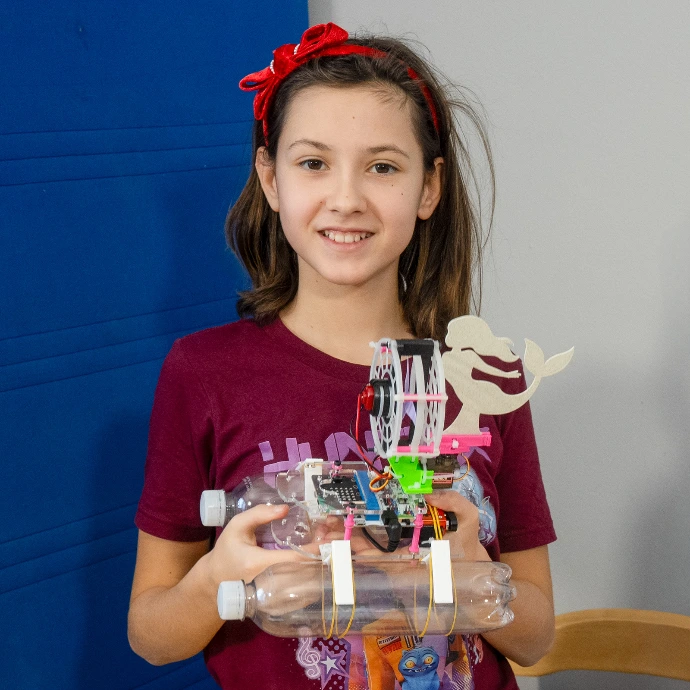
    Student holding a BottleBoat made from plastic bottles with a micro:bit controller and a mermaid-shaped rudder.
    The BottleBoat kit includes two steering variants: a classic rectangular rudder and vector steering using a motor mounted on a servo. This lets students compare a simple steering system with a more advanced one on the same boat.


    Students first build and test the boat with the regular rudder. They see how basic steering works and how the boat behaves when turning left, right, or going straight.


    Once they understand this baseline, students can continue with the BottleBoat activities. They can design and 3D-print new parts such as custom rudders, fins, or a jet duct, and then test how these changes affect steering, turning, speed, stability, and towing.

    Activities

    The curriculum includes several activities that ask students to 3D-print extra parts and modify the original BottleBoat.

    Design Your Own Rudder

    Students test the BottleBoat with the standard rudder, then use Tinkercad to design and 3D-print their own rudder shapes and compare how each design changes the way the boat turns and moves.

    Propeller Duct Experiment

    Students 3D-print the jet duct for the propeller from the provided Tinkercad model, install it on the same BottleBoat, and compare how the boat’s speed, steering, and towing ability change compared to the original open-propeller version.

    Fins and Bottles Experiment

    Students 3D-print fins in different sizes and shapes, combine them with various bottle sizes and bottle shapes, and test the BottleBoat on the water to see how each combination changes speed, stability, and how straight the boat moves.

    Archimedes Weight Experiment

    Students use Archimedes’ principle to determine the weight of the BottleBoat without a scale, by measuring how much water it displaces and how much extra load it can safely carry.

    BottleBoat Race Challenge

    Students tune their BottleBoats (rudders, fins, duct, load), then race them over a fixed distance or around simple markers, recording times and comparing which design choices give the best speed, control, and consistency.


    We will add new BottleBoat activities over time and welcome ideas from students and teachers, 
    so the project can grow from real classroom experience.

    BottleBoat variants and remote
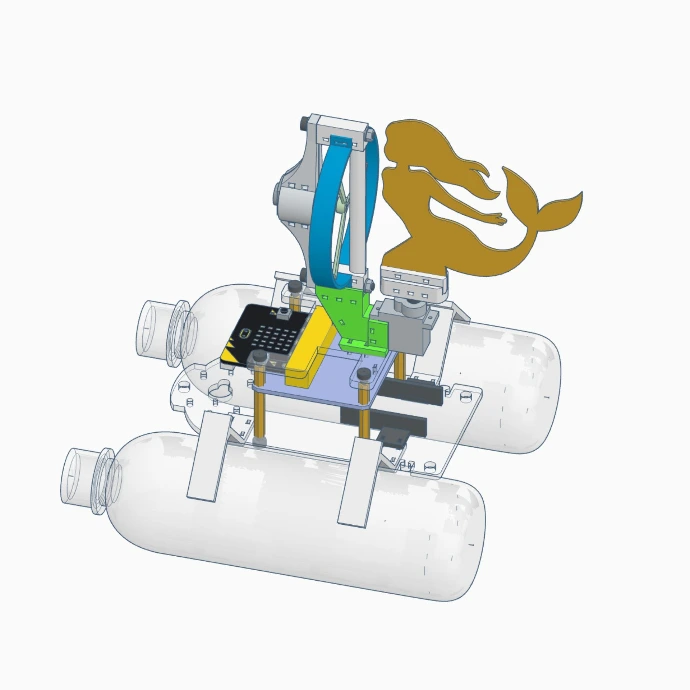
    “BottleBoat with a custom 3D-printed rudder”
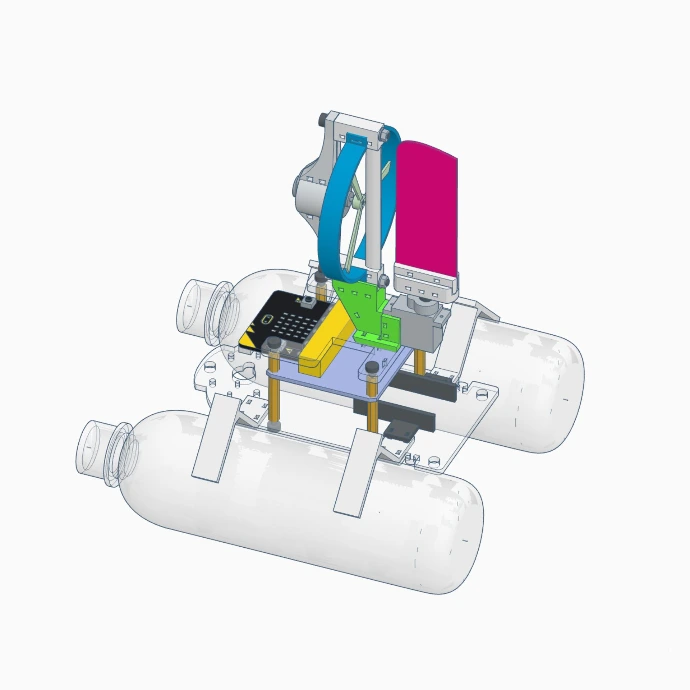
    “BottleBoat with standard rudder and open propeler”
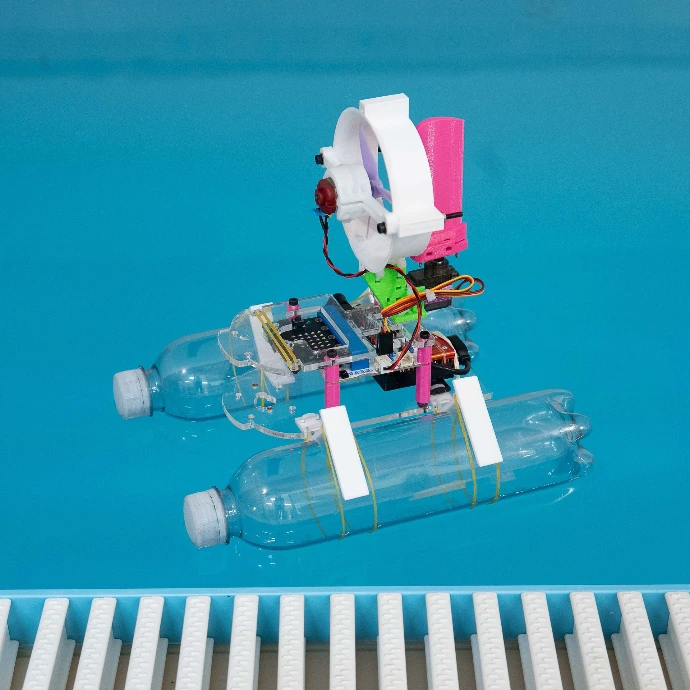
    “BottleBoat with 3D-printed jet duct on the water”
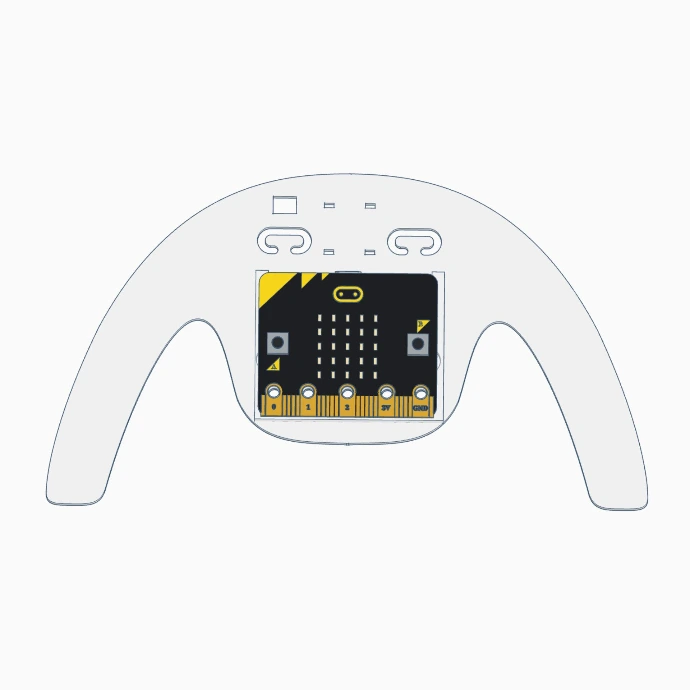
    “JellySTEM micro:bit remote control”

     JellySTEM Floor Racers
    Activities

    Swivel Wheel Conversion

    Students replace the front servo with a swivel (caster) wheel and discover that they now need a different control strategy: instead of steering with a servo, they must control each wheel independently, like a tank..

    Compare Steering Modes

    Using the ready-made MakeCode program for the swivel-wheel version, students drive and compare this Floor Racer with the default servo-steered version, observing differences in turning, precision, and handling.

    Write Your Own Swivel-Wheel Controller

    Following the curriculum, students create their own MakeCode program for the free-wheel variant, experimenting with different ways to control speed and turning and deciding which approach works best for their Floor Racer.

    Floor Racer Challenge

    Students tune their Floor Racers (wheel setup, steering mode, code) and run timed challenges on a simple track with turns or obstacles, comparing which designs and control strategies give the best speed and control.

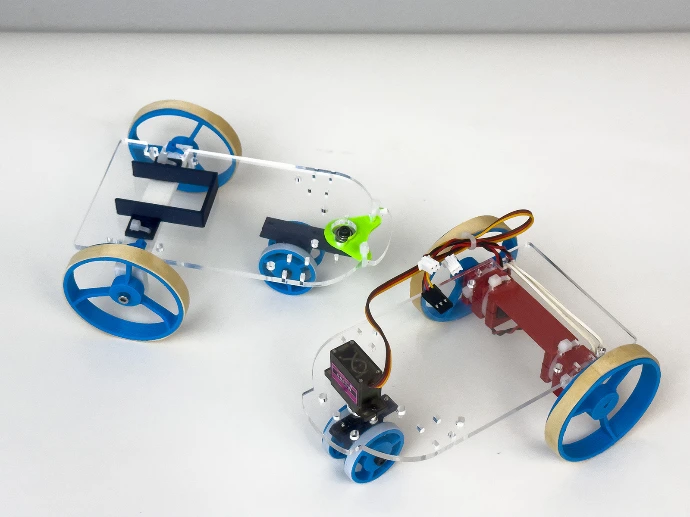
    The Floor Racers kit uses the same micro:bit electronics and control software as the BottleBoat, but adapts the vehicle to move on the floor instead of on water.

    It includes two configurations:

    • Motorized Wheels Deck with two micro-motors and an additional steering servo
    • Free-Wheels Deck with a swivel front caster

    In the basic Motorized Wheels Deck, the propeller unit is replaced by wheels driven by micro-motors, and a servo motor is used for steering so that the control works just like on the BottleBoat.


     JellySTEM BottleBoat & Floor Racers Combo Kit

    The BottleBoat & Floor Racers Combo Kit is a 2-in-1 JellySTEM set. It lets students build both a water-going BottleBoat and a floor-running Racer using the same micro:bit electronics, control board, and most 3D-printed parts.

    With one cost-effective kit, students can explore how the same design and code behave in two very different environments: on water with a propeller and rudder, and on the floor with wheels and steering.

    The Combo Kit includes all parts for both variants, plus ready-to-use MakeCode programs. 

    Classes can start quickly with the base designs and then move on to BottleBoat and Floor Racer activities such as custom rudders, fins, jet duct experiments, wheel configurations, and race challenges.

    Micro:Bit Programming
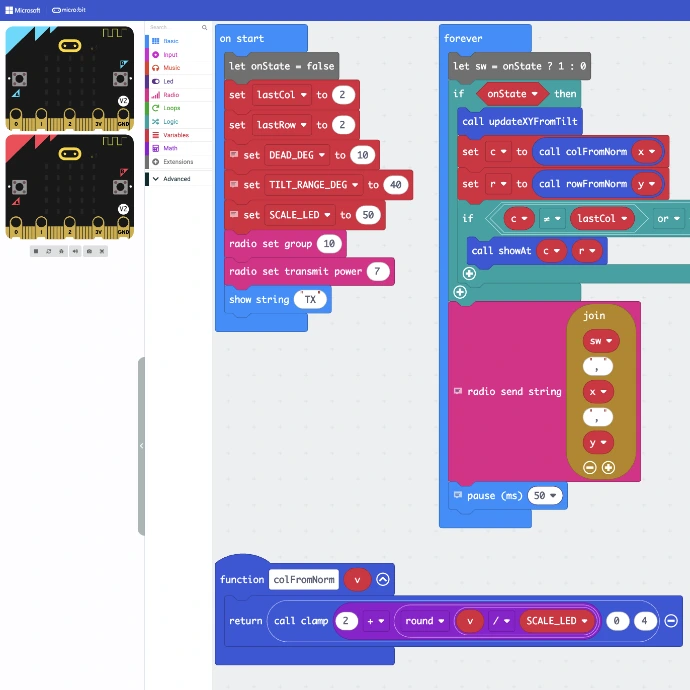
    Programming the micro:bit is a core part of JellySTEM BottleBoat and Floor Racers. 

    The control software is the same for both water and floor vehicles, on both sides — the transmitter (remote) and the receiver (vehicle).

    Students do project-based programming and learn by example, but they do not just edit our programs. Instead, they write their own MakeCode programs from scratch to control the boat and floor vehicles in a simpler way. 

    They start with very simple, constant-based programs, then gradually add variables, functions, loops, conditions, and their own custom functions.

    Along the way, they also learn the basic principles of remote-controlled projects: how the remote and vehicle communicate, how to structure the code, and how to debug when something does not work as expected. 

    Older students can go further and explore AI-assisted programming, using AI to help them design and refine their micro:bit programs, based on clear instructions defined by the author of the JellySTEM concept, Ladi Goc.

    Ready to Get Started


    Click the button and fill in a short form You will receive a clear price breakdown that you can share with your school or district.


    Get an Estimate

    Copyright © IMADE3D LLC.  2026
    Powered by Odoo - Create a free website